The Weight of Legacy
The story behind the IAAM Culture Awards Medal.
International African American Museum | 2024–2026
I've always believed that the smallest details can carry the biggest stories.
When the International African American Museum introduced its Culture Awards in 2024 during the inaugural Jubilee Soirée, they wanted to recognize individuals whose work preserves, advances, and reimagines African American culture.
But there wasn't a physical award.
When I joined the team at the end of 2024, our CEO Dr. Tonya Matthews wanted to change that.
She knew what she didn't want: a traditional trophy.
What she did want? Well, that was a little less defined.
And that's where my imagination went to work.
I started thinking about what it meant to recognize someone for their contributions to culture and history. What could we give them that felt distinctly IAAM? Something they could wear with pride, pass down, and perhaps one day become a family heirloom.
Somewhere along the way, the idea of a medal began to take shape.
But I didn't want to create just any medal. I wanted every element to mean something.
I wanted it to tell a story before anyone ever explained what it meant.
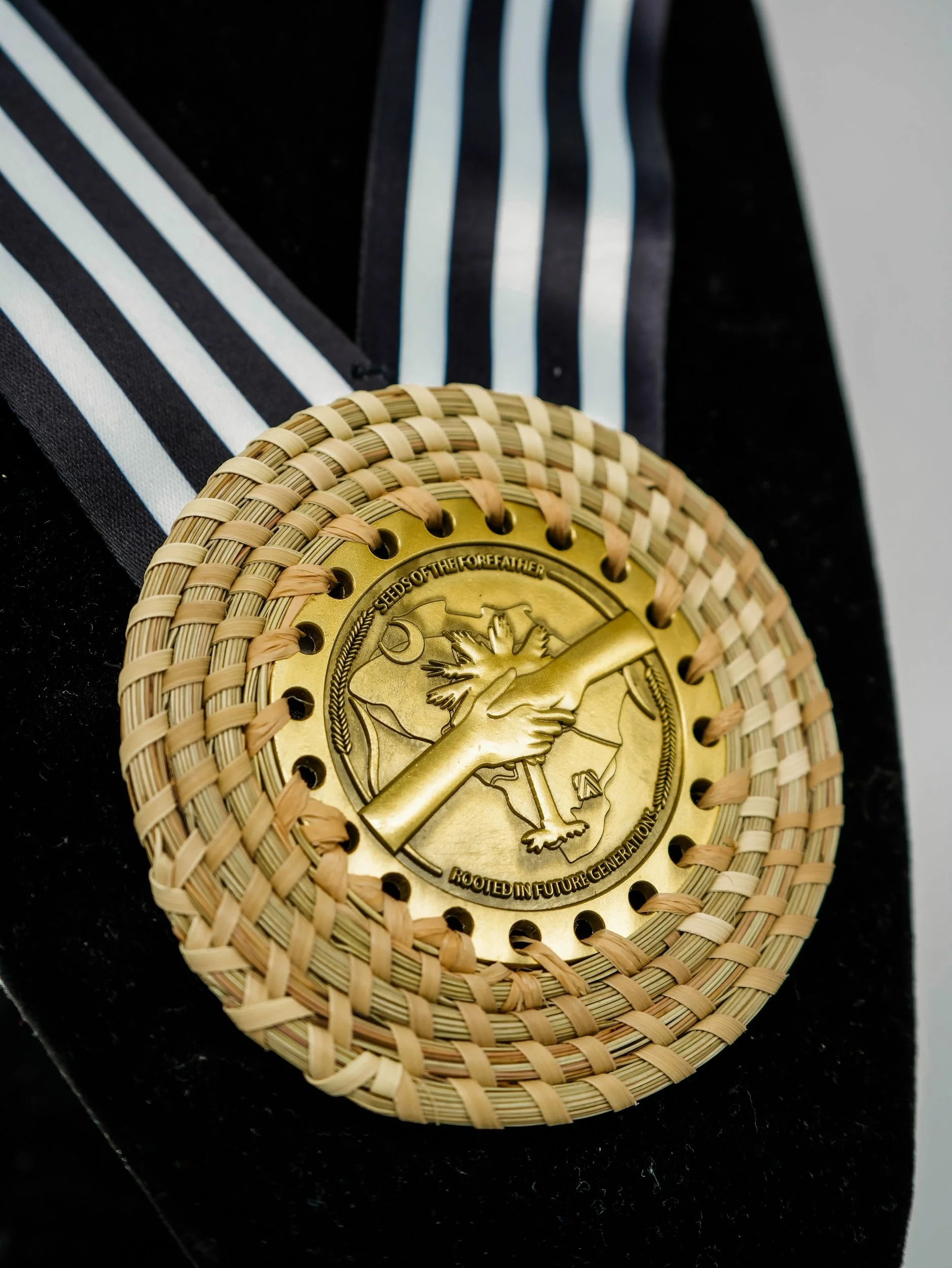
Seven black-and-white stripes represent seven regions of Africa from which enslaved Africans were taken. At the center, hands meet across the outline of South Carolina, connecting Africa, the Lowcountry, and the generations that came before us with those still to come.
Carolina Gold rice acknowledges the African knowledge, skill, and labor that helped shape the Lowcountry. The palmetto roots the design in South Carolina, while the IAAM logo marks Charleston, the place where the museum stands today.
Surrounding it would be sweetgrass. Not simply as decoration, but as a living connection to the Gullah Geechee culture and craftsmanship that continue to shape this region. And finally with the inscription reading:
“Seeds of the Forefather. Rooted in Future Generations.”
A few words that capture exactly what I wanted this medal to represent: the stories, knowledge, and traditions we inherit, and our responsibility to carry them forward.
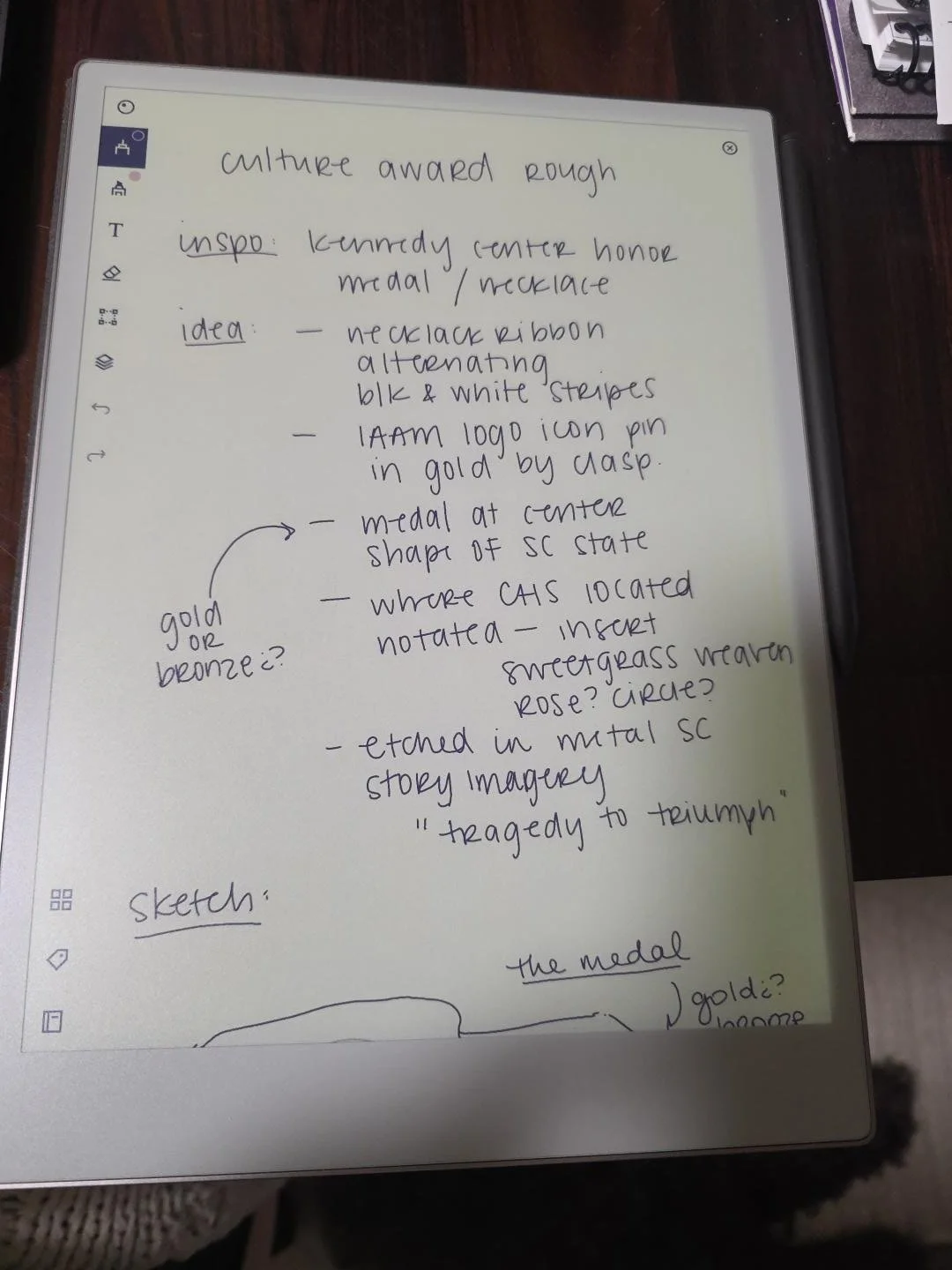
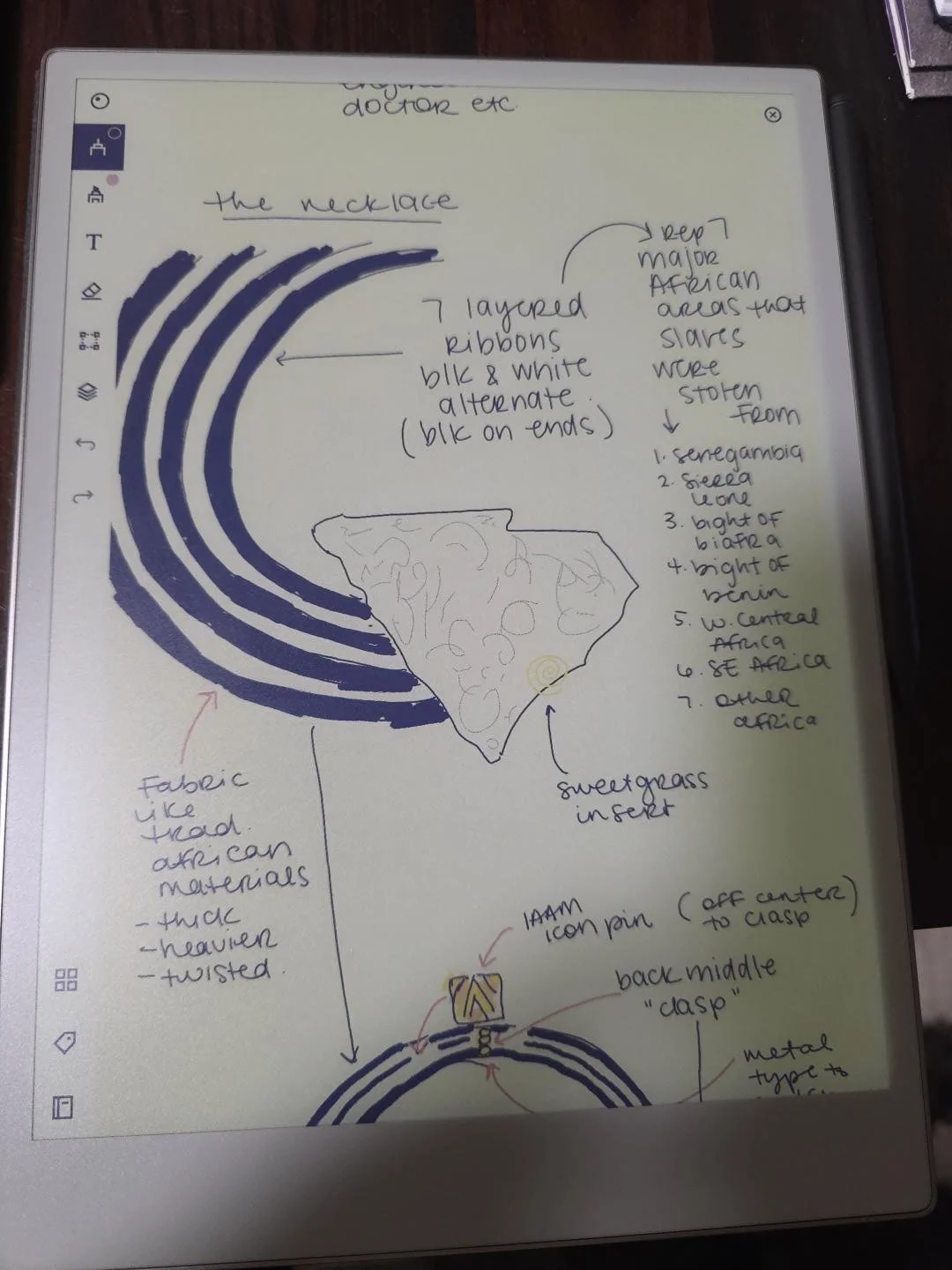
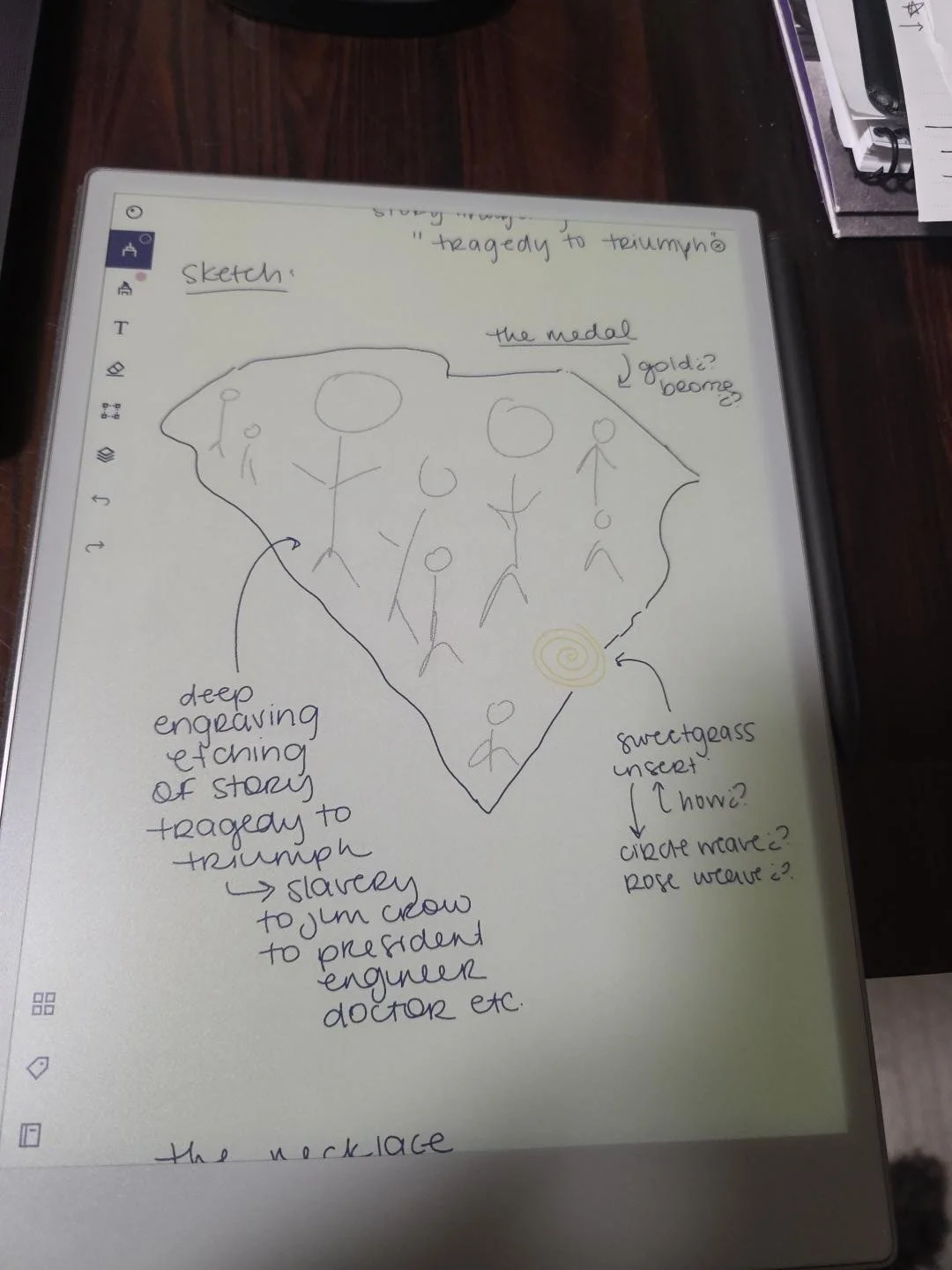
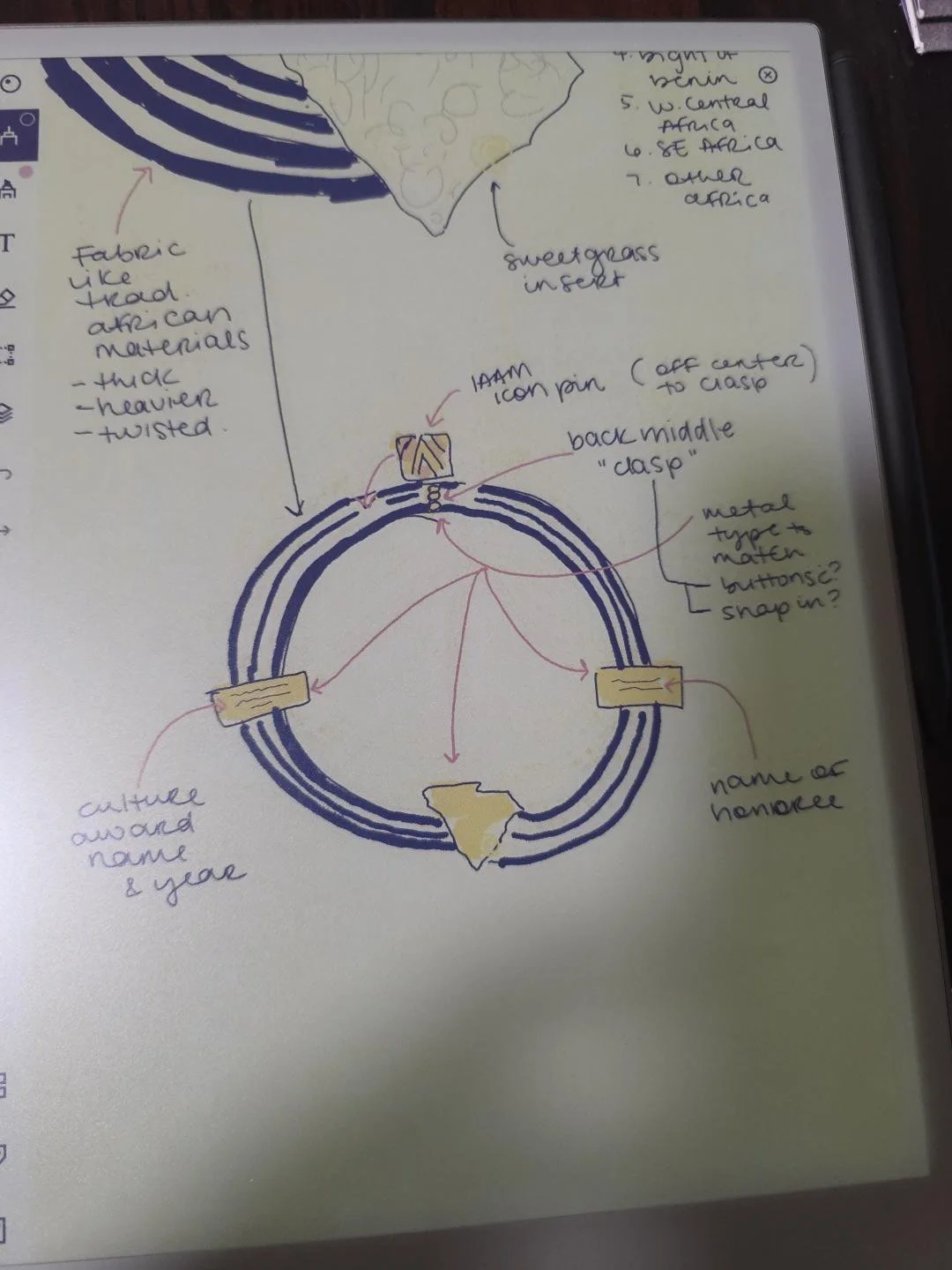
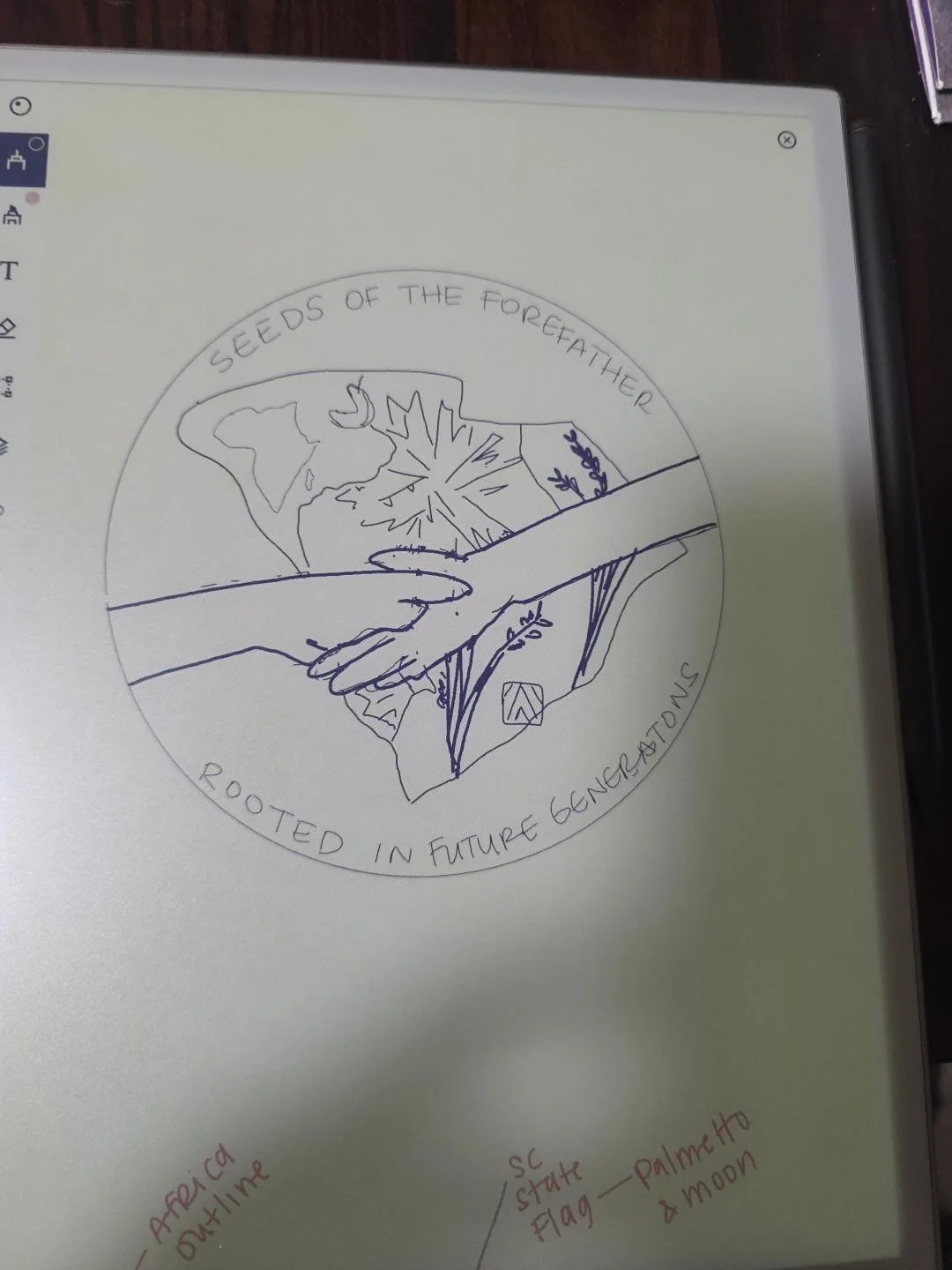
From sketch to life
Of course, having an idea and figuring out how to make it are two very different adventures.
I began with sketches and a vision for how these elements could come together. I called in for help digitizing my rough sketches into illustration, Jon Lessans, the owner of Indigo Ink. We moved from my original concept into design development and fabrication, translating the symbolism into something tangible.
Then came Corey and Karen Alston. A fifth-generation sweetgrass weaver and Guinness World Records title holder, Corey and Karen brought a craft passed down through generations into the project. Using sweetgrass that Corey harvested directly from IAAM's African Ancestors Memorial Garden, Corey and Jon engineered and made sure the math mathed so that Karen could work her magic by hand-weaving sweetgrass medallions that encircle each medal.
There was something particularly meaningful about that detail. The medallion wouldn't simply reference the Lowcountry. It would physically carry a piece of the museum's landscape and a living cultural tradition.
It was coming together.
Until it wasn't.
Our original plan was to present the medallions at the 2025 Jubilee Soiree to the 2025 Culture Award recipients. But tariffs and extreme shipping delays had other ideas. The medals didn't arrive until January 2026, and they still needed to be woven. Frankly, I was utterly disappointed and ashamed that I couldn’t deliver, despite it being out of my control.
The Moment It All Came Together
Fast-forward to October 2026.
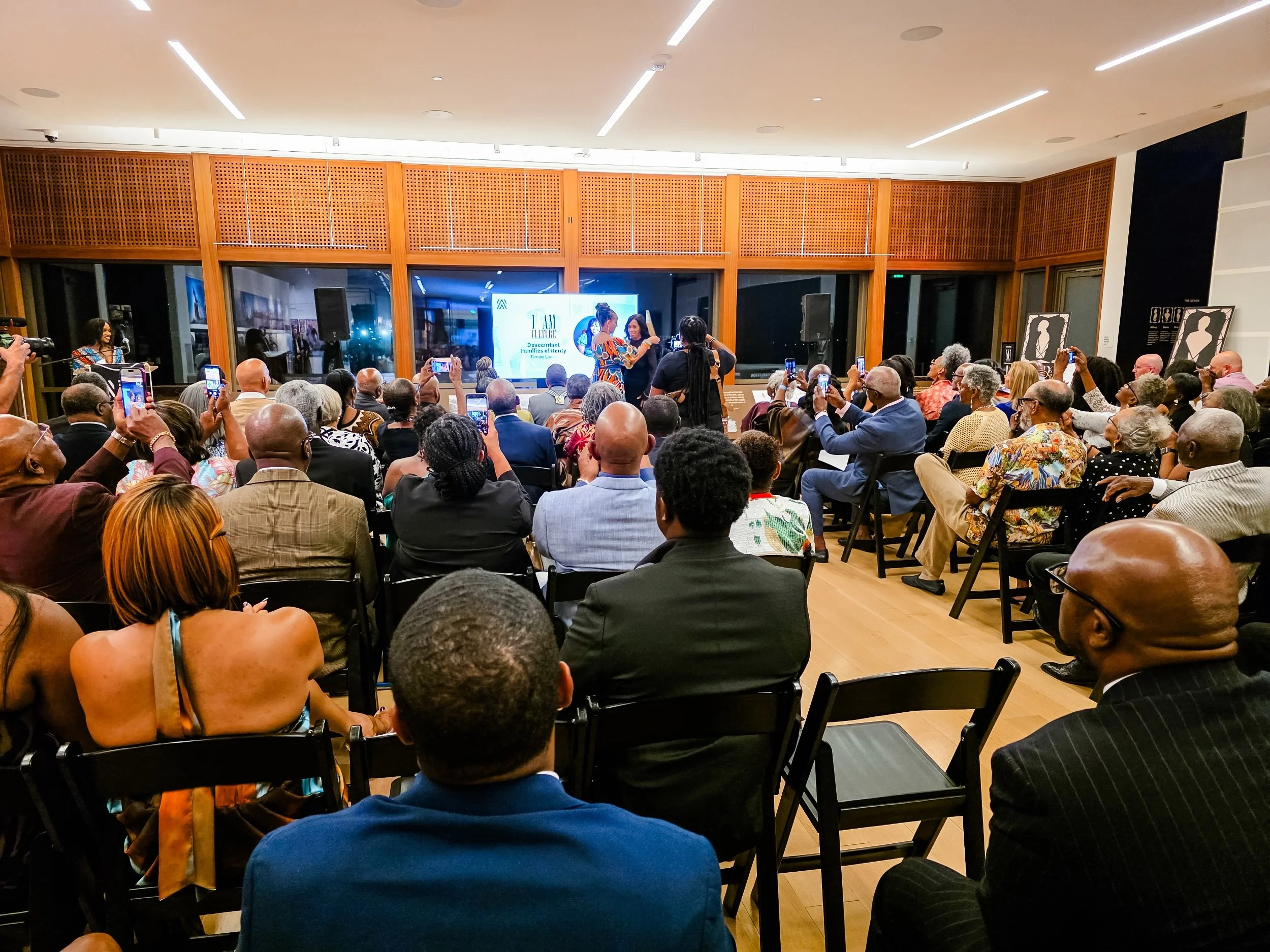
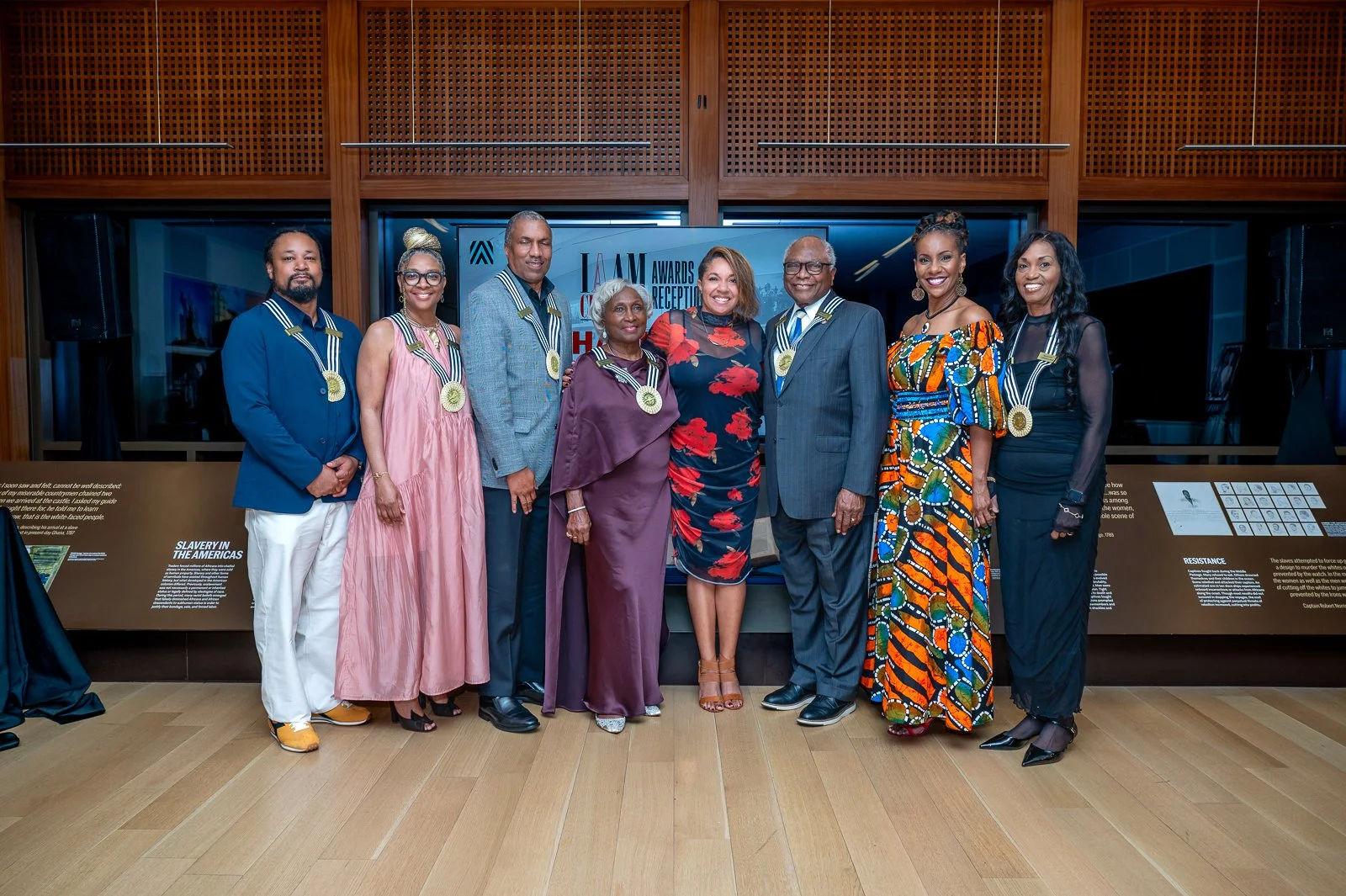
During IAAM Homecoming, we hosted the 2026 Culture Awards Reception, bringing together artists, cultural leaders, and change-makers whose contributions continue to shape our communities.
And this time, the medallions were ready. After the sketches, revisions, fabrication, shipping delays, and handwoven details, I finally got to see them where I'd imagined them all along. Presented to the people we created them to honor.
And then there was Congressman James E. Clyburn.
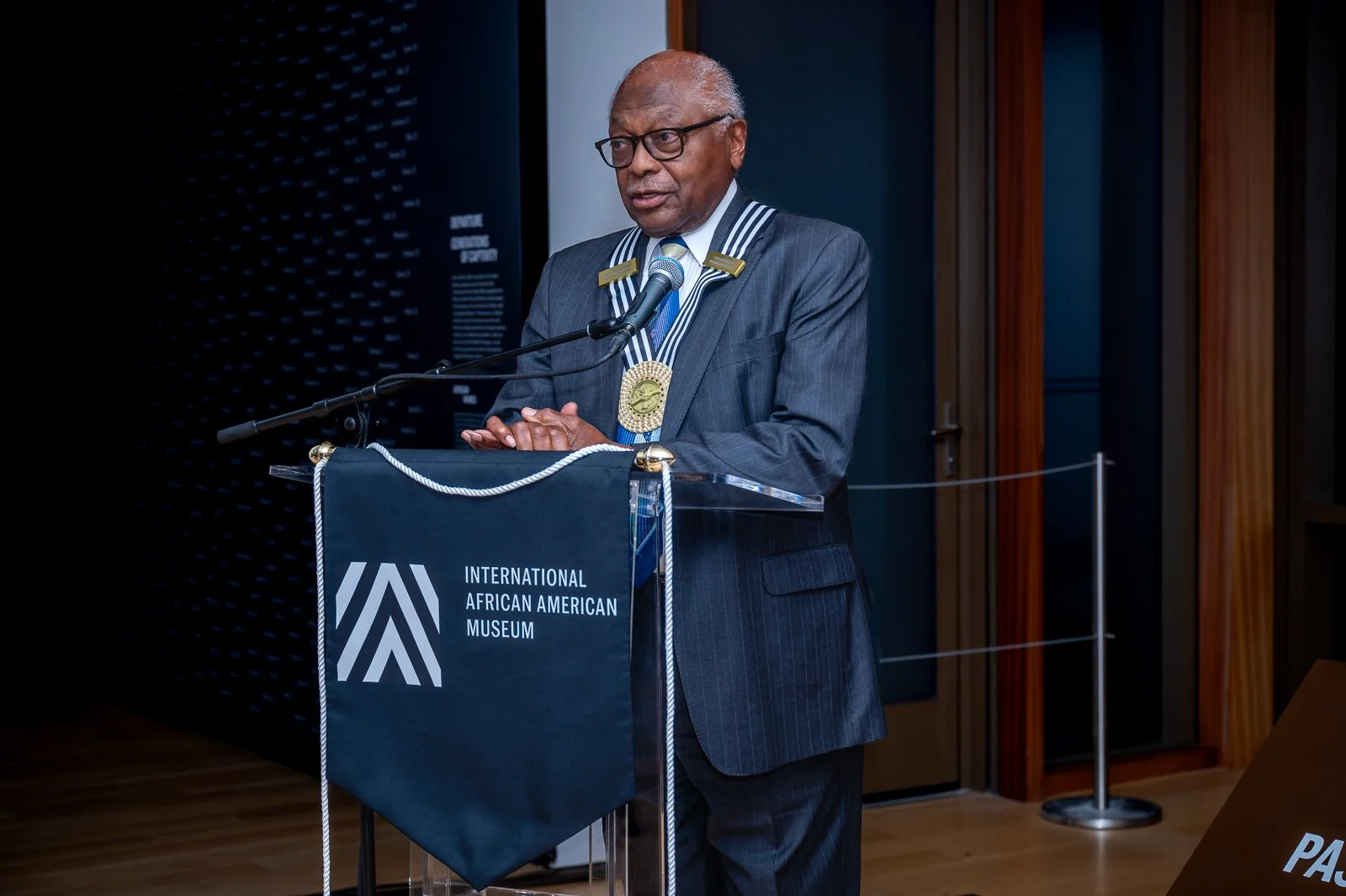
We were honoring him as the ICON Award. And let me tell you, I thought it was something to make a historical gift for a sitting President of the United States…Seeing someone whose life and work have helped shape history, for not only his fellow Americans but especially for African Americans, wearing something I'd imagined and designed was a moment I won't soon forget. I was caught in a wave of emotions watching him accept the award and then speak to the audience while wearing it.
I couldn't help but think back to that original conversation with Dr. Matthews. She wanted something that wasn't a trophy.
Well, I think we figured out what that something was.
What I love about this medallion is that its story doesn't end with the people who designed or brought it to life. It continues with the people who receive it, the histories they represent, and perhaps, one day, the generations who inherit it.
That's the part I'm most excited about.
Because the medallion was never meant to be the whole story. It was meant to carry one forward.
Ashlei