

The return and stewardship of the 1850 Daguerreotypes
International African American Museum
Silver Honoree · 6th Annual Anthem Awards
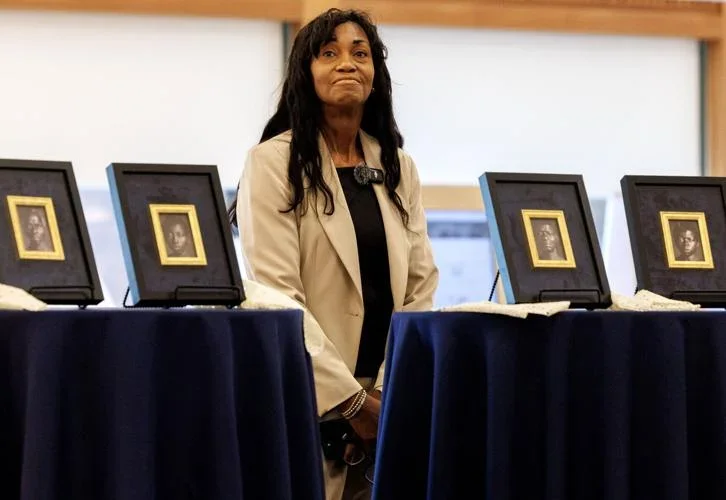
When we got the news that IAAM would become the steward of the 1850 daguerreotypes, I immediately knew I needed a better understanding of what we were receiving and, more importantly, who we were receiving.
I bought Tamara Lanier’s book From These Roots and started reading. I wanted to hear in her own words what it meant to fight for her ancestors and what it took to spend years challenging Harvard with the help of Ben Crump, Josh Koskoff, and the other attorneys who worked alongside her. By the time I began thinking about how we would share the news, I understood that the museum was stepping into a story Tamara and her family had been carrying for years.
The daguerreotypes were made in South Carolina in 1850. They depict seven enslaved people whose names were Alfred, Delia, Drana, Fassena, Jack, Jem, and Renty. The photographs were made without their consent to support a lie about Black humanity. More than 175 years later, 15 originals and 15 replicas returned to South Carolina from Harvard and entered IAAM’s care. Read IAAM’s announcement about the return.
Bringing them home
I worked closely with BerlinRosen, connected with The New York Times, and helped curate one of the biggest press conferences of my career and one of the most spiritually moving homegoing services I’ve ever been part of. We were preparing to share news that would travel far beyond Charleston. We were also making space to welcome Alfred, Delia, Drana, Fassena, Jack, Jem, and Renty home.
I think about the press conference and the homegoing together because each asked something different of us. At the press conference, we had to explain what had happened, whose work made the return possible, and what IAAM was taking responsibility for. The homegoing gave us space to pause and honor the people at the center of it all. I wanted the care we brought to that service to show up in the way we communicated about the return, too.
From homegoing to They Lived at Homecoming
That work continued long after the February announcement. As our Learning & Engagement colleagues built out They Lived, my team and I stayed in conversation with them about how we would introduce the exhibit to the public. In the gallery, visitors would have context and a choice about whether to view the photographs. We had to think just as carefully about what someone might encounter in a headline, an email, or a promotional image before they ever walked through our doors.
At the same time, my team was building IAAM’s inaugural Homecoming weekend. The opening of They Lived was part of that weekend, alongside the Legacy and Lineage Symposium, where descendants spoke about family memory and reclaiming their histories. I’m proud of the work it took to build a weekend that made room for those conversations and of the collaboration that helped us carry the intention of the exhibit into the way we invited people to experience it.
From Charleston to an international stage
The return drew coverage from The New York Times, The Boston Globe, and the BBC. By October, visitors could experience They Lived for themselves and see how the museum was putting its commitment to stewardship into practice.
When I found out the Anthem Awards submission deadline was coming up, I knew I had to put They Lived forward. As CMO, I’d spent 11 months working alongside people who gave so much of themselves to this work. From the return and homegoing to the exhibit and our inaugural IAAM Homecoming, I’d seen what it took to carry a historic moment into a campaign and a public experience that did it justice. I knew the work deserved recognition and then some.
So I took a leap of faith. I asked for forgiveness instead of permission and submitted it.
And what do you know? The world agreed.
The stewardship of They Lived has earned Silver at the 6th Annual Anthem Awards, one of two Silver honors for IAAM in our first year entering a competition that drew more than 2,500 entries from 43 countries. I’m proud I put our work forward. And I’m even prouder of whose work we got to celebrate when the news came in. Tamara Lanier and the descendants fought for the return, and our colleagues put so much care into what came after.